Since Honda Pilot was introduced to the public in 2002, as the first three-row, mainstream SUV to be developed on a car-like unit-body platform, it has been a favorite in America, as the 2 millionth Pilot was sold in North America in January, and its top sales year coming last year with 159,615 units sold in North America. Pilot also has garnered high brand loyalty, with approximately 63 percent of Pilot buyers returning to purchase another Honda vehicle.
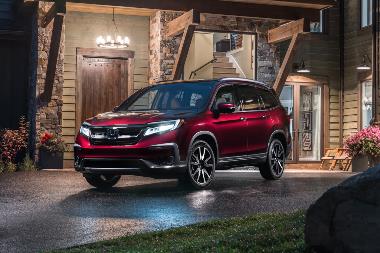
Last re-engineered from the ground up for the 2016 model year, the family adventure vehicle gets a mid-generation freshening for 2019 with restyling, added tech capabilities and new features.
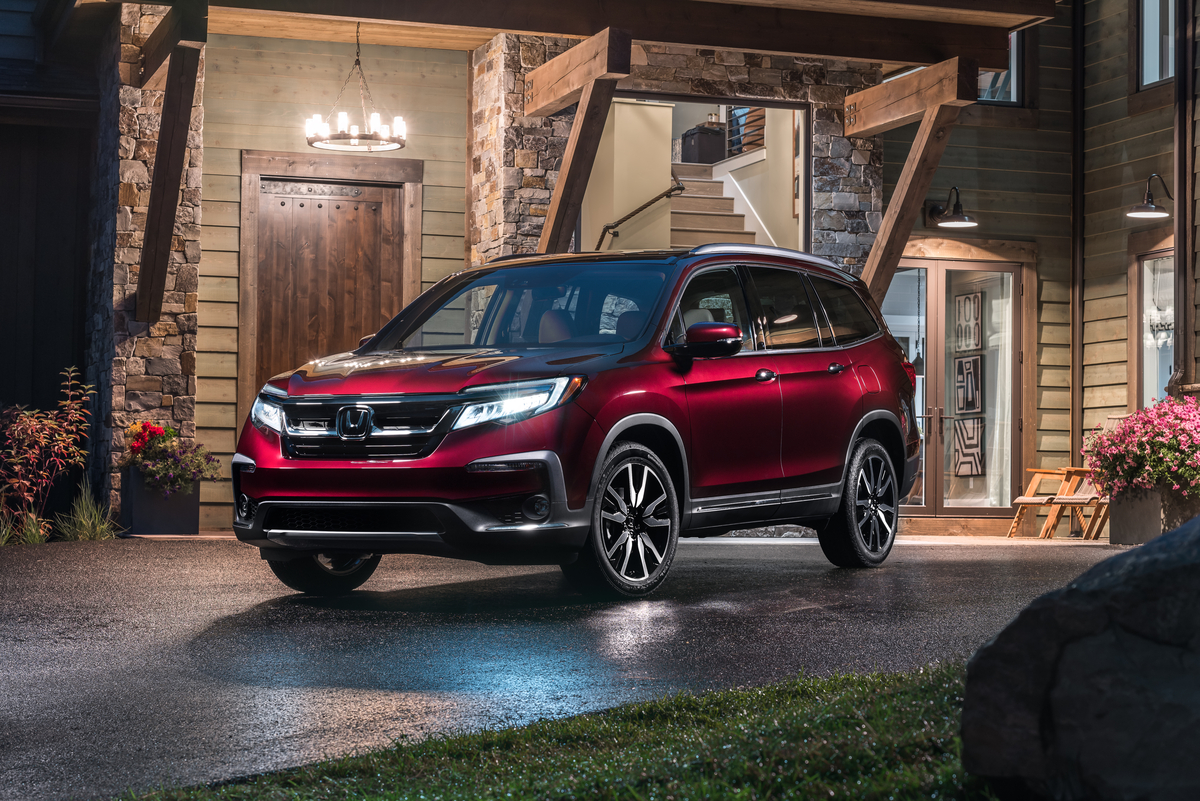
Borrowing inspiration from Honda’s Odyssey minivan, the 2019 Pilot restyles with an aggressive new grille featuring a bold interpretation of the Honda “flying wing” design, and sporty front fascia with standard LED low-beam headlights. The rear features new taillights, a new bumper, and chrome accents. Updates to the interior include a redesigned steering wheel, new trim around the vents and wider fold-down armrests for the driver and front passenger. Additionally, the clock-radio-style digital speedometer and analog tachometer have been replaced with a larger high-res central screen and enhanced infotainment system. The 2019 augmentations also include a number of refinements to the 9-speed automatic transmission available in Touring and Elite models, and the Honda Sensing suite of advanced safety features is now standard for all trims.
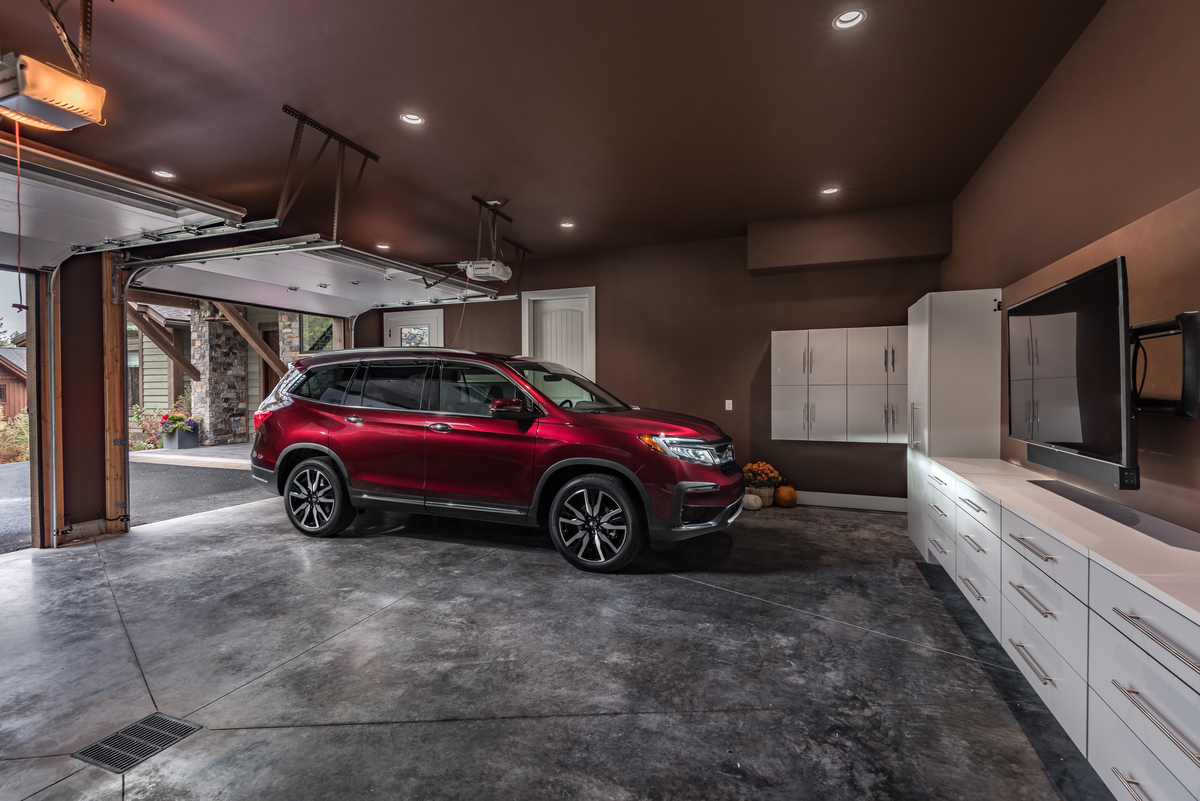
The eight-person family utility vehicle is built with unit-body construction with angular architecture and a muscular demeanor. The 2019 Pilot measures 196.5 inches in length; 78.6 inches in width; and a wind-attracting at 70.6 inches in height on a 111.0-inch wheelbase. Ground clearance is 7.3 inches, and curbweight ranges from 4036 lbs. to 4306 lbs. depending in trim and extras.
Inside, Pilot is filled with soft-touch materials throughout the cabin and tech runs supreme throughout and now benefits from a variety of enhancements and upgrades to its audio/connectivity and driver convenience. Pilot's new instrument cluster now uses a 7-inch Thin Film Transistor with a wide range of information content and driver-selectable customizable features.
Standard in Pilot EX trims and above, its 8-inch touchscreen uses gestures common to smartphones and tablets, such as swipe, tap and pinch, to control the vehicle's audio system, display settings and other advanced features, while also adding a volume knob. Pilot LX, EX, and EX-L models get a 218-watt audio system with six speakers plus a subwoofer; and Touring and Elite models get an updated 10-speaker 590-watt system with a subwoofer.
The Pilot cabin is accommodating, with headroom for the EX-L I tested of 39.5 inches up front (some trim models reach 40.1 inches), 39.9 inches in row two and 38.9 in row three. Legroom is 40.9 inches in the front row, 38.4 inches in the middle row and a child-accommodating 31.9 inches in row three. Shoulder room comes in at a comfy 62.0, 62.0 and 57.6.
The 2019 Pilot powers up with a 280hp, 262 lb-ft of torque 3.5-liter V6 engine. Depending on the trim model, it is mated either to a 6-speed automatic or 9-speed automatic transmission. My EX-L trim was outfitted with a 6-speed and was EPA rated at 18 mpg/city, 26mpg/highway and 21mpg overall in AWD. My mixed-use tests showed an average of 21.1mpg.
My Pilot showed good road manners, a quiet cabin and a smooth, bump-resistant experience. The unit-body construction body and chassis are mated to a MacPherson Strut Front Suspension and a Multi-Link rear with front and rear stabilizer bars, resulting in a level and attentive experience. Electric Power-Assisted Rack-and-Pinion Steering is compliant and understeer is apparent only in the quickest of maneuvers.
Acceleration is better than expected for a 3-row family mover, and handling is a bit vague. But zero-to-60mph tests were accomplished in 6.6 seconds, with a quarter-mile dispatched in 15.2 seconds (hand-timed) in less-than-perfect road conditions.
Honda remains committed to safety, and for 2019, all Pilot models come standard with the Honda Sensing® suite of advanced safety and driver-assistive technologies. Honda Sensing® helps provide greater awareness of driving conditions around the vehicle, and in some cases helps drivers maintain lane position. Comprising the Honda Sensing® suite are Collision Mitigation Braking System™ with Forward Collision Warning; Road Departure Mitigation; Lane Keeping Assist System; and Adaptive Cruise Control.
The 2019 Honda Pilot is available in five trims, starting with the LX at $31.450 for 2WD; the EX starts at $34,330; the EX-L starts at $37,760; the Touring trim starts at $42,540 and the top-of-the-line Elite trim starts at $48,020. My Obsidian Blue Pearl test EX-L was loaded with standard items including a leather-trimmed interior, power tailgate, one-touch power moonroof, two-position memory for driver's seat, 4-way power passenger's seat, automatic-dimming rearview mirror, integrated 2nd-row sunshades, HomeLink® remote system and three USB charging ports. I always opt for 4WD and that added $1900 to the sticker. Body side molding added $225; crossbars with black roof rails added $750; low-profile hood air deflector added $100; black running boards added $450; my Gray leather interior added all-season floor mats for $208; and back-up sensors added $500. With destination and handling fees of $1045, my test 2019 Honda Pilot EX-L stickered at $42,438 (by comparison, that is only $8 above the similarly outfitted 2016 EX-L I tested for this column.
> Visit www.CarlisleEvents.com for more on the automotive hobby.
Mike Blake, former editor of KIT CAR magazine, joined Carlisle Events as senior automotive journalist in 2004. He's been a "car guy" since the 1960s and has been writing professionally for about 30 years. </I>








.png?sfvrsn=8cce4cd8_2 "Parx Casino_Footer (125x125)")